Photo via Oscar Howe Summer Art Institute, University of South Dakota
Modern Western artists have been defined in multiple ways over the last 100 years. From the romantic, isolated genius to the social commentator on society, each label has been placed on them from afar. The added identity of Indigenous or Native American artists adds a perceived stigma of a storyteller of ancient knowledge. Any label applied to an artist, whether non-Native or Native, generally will irritate said artist as it ignores the individual’s humanity. For Native artists specifically, what is often missed is their connection with and the obligations they carry toward their communities. This is as true for artists of the Northern Plains, who often serve as bridges to traditional culture, communicators and educators to young mentees, and interpreters to non-Native communities that intersect with their homelands.
There is a trope from the 1970s and 1980s that there is no word for “art.” While this phrase is a continuation of the social romantic commentary of Native American artists, it does reflect on the duality of tools and other functional objects being shaped with pride and craftsmanship. Representations of events, either as a summary of the year through the winter count or depictions of conflicts with US forces in ledgers, were considered more as documentation than aesthetic decoration. The geometric and/or floral designs on regalia and clothing signaled Northern Plains Indigenous values and family history. Older generations within the family mentored the younger, planning or creating the clothing or material designs, then discussing the process’s relevance in group creative settings. This practice pre-dates the first disruptions by Europeans and continues to this day. I recall going to my Aunt Tina’s home in the 1980s and seeing, spread out on her dining room table, folds of fabric being hand-sewn by my 85-year-old grandmother, speaking Dakota to her daughters and granddaughters as they assembled star quilts and regalia.
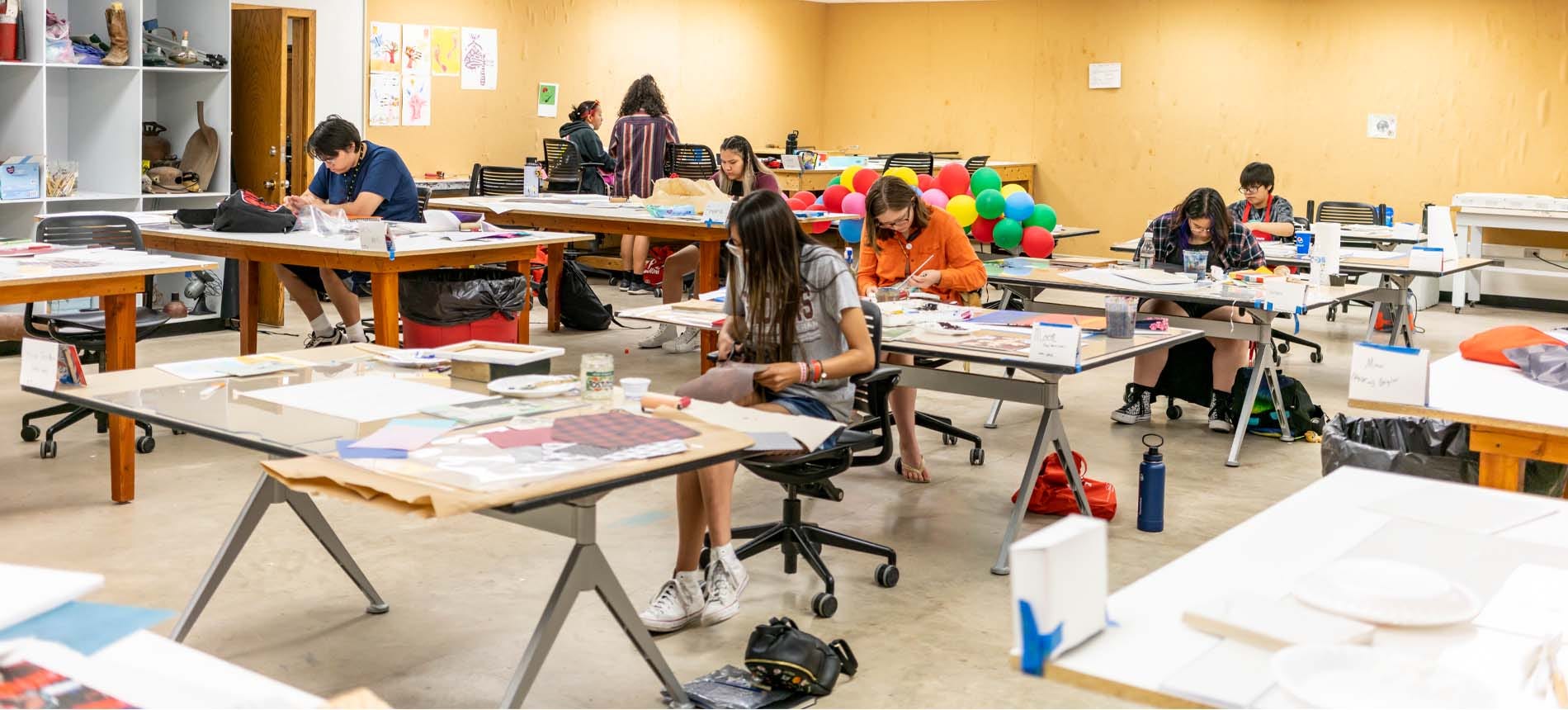
In the Native American art world, this practice still continues. A completely relevant example of this is the Oscar Howe Summer Art Institute (OHSAI), held annually at the University of South Dakota in Vermillion, South Dakota. When it started in 1960, Yanktonai Dakota artist Oscar Howe (1915-1983) invited a handful of Native American high school students from Northern Plains tribal reservations to spend a few weeks at the university studying with the artist. After his passing in 1983, the practice continued, and to this day, professional artists meet with Native American youth to share not just artistic instruction and practice but also their traditions, values, and expectations.
Intergenerational mentorship is not limited to the art field. Today, it has become a practice among those who have achieved success and are giving back to their communities. Sean Sherman (Oglala Lakota) has turned his success as a nationally recognized chef into a nonprofit organization, North American Traditional Indigenous Food Systems (NATIFS), to promote food sovereignty, encouraging people to understand their Indigenous American culinary roots, dating back long before the reservation era.
Culture bearers like Jeremy Red Eagle (Sisseton Wahpeton) and Josh Flute (Sisseton Wahpeton) have created bow-making workshops and culturally focused practices to help young mentees understand the traditions of community care. An older generation, having rediscovered aspects of culture not readily available to them in their youth, is turning around and sharing this with a younger generation behind them, spending years of their lives cultivating a sense of responsibility and accountability within their community. This community-focused work aims to emphasize to younger generations that if they understand their place in the community, they are supported and cared for. They are not left alone to succeed, as was commonly expected of young Americans in the 20th and 21st centuries.
Indigenous and Native American artists often engage in community-focused work, as this was the model they grew up in, and give back without expecting notoriety or acclaim. This reciprocity is a calling so many artists have heard, and they are eager to give back. It generally doesn’t come from a place of resistance or from trying to reclaim an old identity, but from a duty to teach those who are young or curious about their culture.
Within this lies the beauty of the culture in its modern position. The artists, culture bearers, and knowledge keepers are collaborating with their communities to create spaces for young people to learn not only cultural traditions but also how to be good relatives, how to be good community members, with the added benefit of keeping traditions as current practice. Within every community, there are people quietly doing the work; it’s important for others to look out for these creatives, so new collaborations between those who are willing to do the work with those who can support them can arise. Great community leaders achieved what they did because they had great mentors and countless supporters. So my question for you is: how do we support those creative mentors, artists, culture bearers, and those eager to do the work?
Stay in touch with Art of the Rural updates in your inbox.

Copyright © 2010-2026 Art of the Rural
